
Observation, intuition, and data: how Evert-Jan van den Hoed builds and maintains successful hospitality businesses
While still studying, he’s already fully immersed in hospitality, and after graduation, he goes full-time. Evert-Jan van den Hoed is a true hospitality entrepreneur. In addition to cocktail bar Kelder65 and culinary hotspot Roast in Leeuwarden, since 2023 he is also the owner of It Foarûnder on Starteiland in Sneek. Personal observations, intuition, and data—hard numbers—play a key role in the decisions Evert-Jan makes to keep his businesses running smoothly. He shares his approach to entrepreneurship and his tips with us.
Roast: smart concept shift from “chicken and beer” to almost fine dining
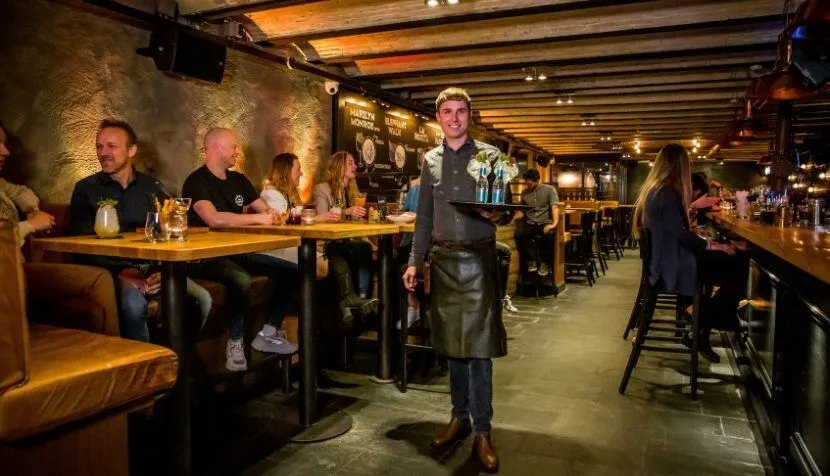
“I had already been the owner of Kelder65, the cocktail bar beneath Roast, when I opened Roast in 2017. At first, we started as a no-nonsense place where grilled chicken and self-pour beer were the main attractions, but I soon realized this concept wasn’t right. The volume of the restaurant, with 140 seats inside and space for 350 on the terrace, was larger than the audience you attract with such a concept. Not everyone wants half a chicken and a beer, of course. When I analyzed the numbers, the conclusion was that only 25% of the dinner revenue came from the Roast Chicken, while other dishes were actually very popular. That was the decisive factor to do something completely different that appeals to a broader audience.”
“Additionally, it became clear that the large beer tables for 16 people weren’t popular. Reservations didn’t want to sit there, and we also saw that walk-ins avoided them. When you notice something like this, you need to dive into the data and do the math. What is the revenue of that beer table, what does that translate to per seat, and how does it compare to the smaller tables around it? My suspicion was confirmed. The revenue from the large beer table was lower than that of the surrounding tables. That tells you that changes are needed to achieve better results. Replacing it with a few smaller tables in that spot could mean an extra €100,000 in revenue per year.”
“We removed the beer tables and the chicken and chose an approach that made my team, my partner, and myself happiest: a culinary taste experience, with beautifully, freshly prepared dishes that complement each other perfectly, served with a high level of service. Roast can be placed at the top end of the mid-market segment. We’re not a stiff fine-dining restaurant, but we do offer the quality and service you would expect there. The informal and more spacious setting makes it accessible to a broader audience. This proved to be a good choice. After the changes, the visitor numbers, revenue and profitability increased significantly.”

It Foarûnder: Step 1: Gather information and learn
“Last year, I had the opportunity to take over It Foarûnder. It’s a venue I was already familiar with, having worked there in the past, and it’s in a unique location: Starteiland in Sneek. The location comes with both advantages and challenges. It’s beautiful and busy in good weather, but when it’s cold and wet, there’s simply no business. Then you start doing the calculations: what are the costs and forecasts? In the best case, we can stay open about nine months a year. Additionally, it offers fantastic opportunities for events and parties, so we decided to go for it.”
“In 2023 zijn we zoveel mogelijk open geweest om data te verzamelen. Om goed te kunnen kijken wat er gebeurt en daar lering uit te trekken. We hebben al veel tevreden gasten mogen ontvangen en hele gave dingen meegemaakt, zoals de Sneekweek, het Skûtsjesilen en diverse bedrijfsfeesten en bruiloften. It Foarûnder is een toplocatie voor iedereen die wil onthaasten aan het water en voor zowel grote als kleine events. We hebben de winter benut om de zaak flink op te frissen en kunnen niet wachten om de deuren eind maart weer te openen!”

Entrepreneurial duty: running a business properly
“As an entrepreneur, I feel a strong responsibility, especially toward my staff. Becoming and staying successful starts with good personnel management and engagement. That’s why it’s important for me to see everything that’s happening in the business. Only then can you coach your team. Of course, you also need to manage based on the numbers. Labor costs, purchasing, margins; everything must be in order. And if it isn’t, you need to take action. Besides what I observe on the floor, data also plays a very important role. Tools like DISH BI and the Staff Planner have made it much easier to gain control over business operations.”
Tip 1. Take a critical look at your opening days and hours
“Start by gaining a clear understanding of your busy and slow days and times. DISH’s BI tool is really excellent for this. I can pull all the analyses I need from it and make decisions much faster. If revenue is consistently lower than we want on a certain day, we simply keep the doors closed that day. Is it quiet in the morning or later in the evening? Then you could open later and close earlier, or do something to attract more guests during those times. Based on last year’s data, we now know exactly which days It Foarûnder should be open and which days should be by reservation only. At Roast, outside the high season, we’re closed on Mondays. On that day, we only generate about 4–5% of weekly revenue, and giving the entire team that day off brings a lot of calm to the team and the planning. That’s very valuable.”
Insights by area/terrace
“Thanks to the BI tool, I not only have insight into performance per location but also specifically per area. This way, I know exactly which areas generate revenue at which times and during which periods, which affects our opening hours and staff planning. For example, it doesn’t make much sense to schedule employees on the back terrace in May if there’s plenty of space on the front terrace. Then we focus on that terrace to maximize revenue there. Essentially, it’s just a simple calculation.”

Tip 2. Ensure your labor costs and revenue are in balance
“There are really only two scenarios: your labor ratio is on target, or it isn’t. By analyzing the numbers and understanding patterns in busy periods, you can schedule staff strategically and keep your labor ratio at the right level. The DISH Staff Planner gives us real-time insight into labor costs and helps us create the right schedule based on all the collected data. Thanks to the integration with DISH Table Reservation, I can also see the number of bookings and take that into account. Past results provide truly valuable information for proper alignment. For example, historical data shows that Koningsdag gets busy earlier than usual, so we schedule more staff that morning than normal.”
Tip 3. Choose a user-friendly POS system
“Quick and smooth order-taking is essential for a high level of service. At It Foarûnder, they were already using the DISH POS system. At Kelder65 and Roast, we were using Vectron, but when we realized how user-friendly DISH is, we switched. The younger generation, of course, has grown up with touchscreens and swiping, which fits perfectly with how DISH is designed. New employees can start using the DISH POS and handheld devices much faster. I personally worked with Vectron for a long time, so it took some getting used to, but I’m very happy with the switch to DISH. Especially the back office is much more organized.”
Tip 4. Analyze your revenue in detail
“As I mentioned earlier, careful analysis and observation are crucial for successful entrepreneurship. I constantly see things happening in the business and then verify them using the numbers. For example, I noticed that the large beer tables generated less revenue than the smaller tables around them. By replacing those beer tables, revenue increased.”
“It’s also valuable to look at revenue on an individual employee level. If you notice that two employees, working at the same time in the same area, consistently show a significant difference in sales, you need to investigate. How are they handling things, and what can they learn from each other? I think it’s very important to train my staff and explain how we do things and why. I also regularly invite employees to dine in the restaurant so they can experience firsthand the level of hospitality we provide.”
Tip 5. Refresh your menu gradually
“At Roast, we want to keep innovating. That’s why we replace one dish on the menu each week with something new. It’s a deliberate choice not to overhaul the entire menu four times a year. This gradual approach provides much more calm for our kitchen and service staff. It minimizes stress and disruption while ensuring consistent quality and manageable stock and purchasing. And in this way, by the end of the year, the menu has been refreshed four times without the chaos.”

Tip 6. Allow guests to make reservations with a deposit
“We’ve been using DISH Table Reservation for quite some time, allowing guests to easily book through our website. Initially, this was to reduce the number of phone reservations, saving time, and to provide a clear overview. Something a paper agenda simply can’t offer. Due to a high number of no-shows and late cancellations, we started requiring a €15 deposit per person, which works very well for us. While phone reservations have slightly increased, over 80% of bookings are now made and prepaid in advance. This gives us much more peace of mind and certainty, making for a far smoother way of working.”